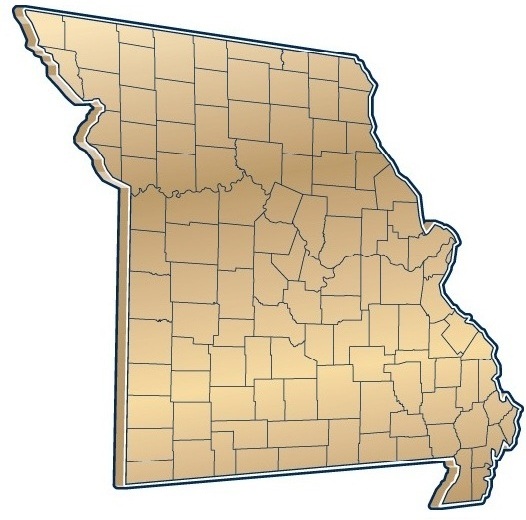
Our Scope
The UM System has a unique and important role in providing teaching, research, service and economic development to the state.
In addition to its four campuses—the University of Missouri-Columbia (MU), the University of Missouri-Kansas City (UMKC), Missouri University of Science and Technology (S&T) and the University of Missouri-St. Louis (UMSL)—the UM System is comprised of a statewide health care system, multiple research parks and incubators, agricultural research stations, and a vast network of small business and technology development centers, extension centers, telehealth network sites and MOREnet sites.
Collectively, the UM System is a $6.5 billion enterprise that represents one of the greatest assets of the state of Missouri.
Centralized and Efficient
The UM System central office eliminates replication of services by centralizing key functions like payroll, benefits management and IT support, which allows the campuses to dedicate more resources to teaching and research. A key outcome of the system structure is that resources are leveraged systemwide to create efficiencies, which in turn, free campus resources to be used for core mission areas and strategic priorities, and helps to keep the cost of education affordable and a college degree attainable for all Missourians.
Alumni
More than 316,000 university alumni live within the state of Missouri, comprising about half of all University of Missouri System alumni around the world.
Economic Development
Between Fiscal Year 2016 and FY21, the university attracted more than $1.36 billion in research, funded primarily from outside the state but spent within the state. In 2023, the university was issued 33 patents and filed 61 patent applications.
Students
There are more than 61,000 students enrolled in the four-campus University of Missouri System.
Our Mission
The mission of the University of Missouri System, as a land-grant university and Missouri’s only public research and doctoral-level institution, is to achieve excellence in the discovery, dissemination, preservation and application of knowledge.
With an unwavering commitment to academic freedom and freedom of expression, the university educates students to become leaders, promotes lifelong learning by Missouri’s citizens, fosters meaningful research and creative works, and serves as a catalyst for innovation, thereby advancing the educational, health, and economic interests to benefit the people of Missouri, the nation, and the world.
Faculty and Staff
More than 5,500 top-quality faculty and researchers work on the campuses of the University of Missouri System, as well as more than 19,000 staff. Last year, UM System employees and retirees residing in the state paid $61.4 million in Missouri state taxes.
Reviewed 2025-06-17