
Using genetic data to answer questions in evolution and ecology has been a common thread throughout my graduate career. When I began my PhD in the Miller Lab at UMSL, the thread extended into the realm of invasive species. My research involves an invasive species known as the European paper wasp, which has been shown to negatively affect biodiversity worldwide (Figure 1). I asked: How can we use genetic data to determine how ecology and evolution influence the invasion success of the European paper wasp? I decided to answer this question using DNA extracted from paper wasp nests to identify their prey species and to compare how those prey species differ between the European and other non-invasive paper wasps. I planned to test the hypothesis that the European paper wasp could eat a wider range of prey, giving it an advantage to invade new habitats. However, because my prey sampling was relegated to the United States, my research offered us little understanding about how the hypothesis might apply throughout the rest of the world.
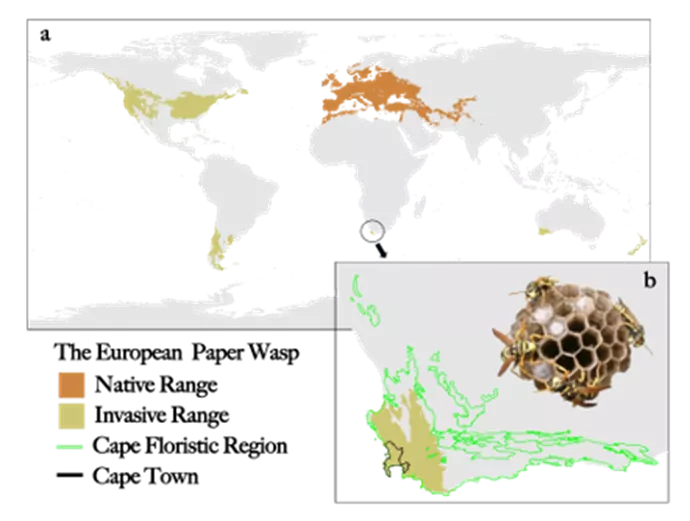
Unlike in many other parts of its invasive range, the European paper wasp invaded Cape Town very recently (~15 years ago). The invasion was (and still is) particularly concerning because Cape Town exists within the Cape Floristic Region that houses a disproportionate amount of the world’s threatened biodiversity. As such, Cape Town has many unique insect species, including other non-invasive paper wasps that could be displaced by the European paper wasp. I was aware of a handful of researchers studying the wasp’s invasion in in South Africa, so when I found out about the Henry Mitchell Scholarship, I decided to apply almost instantly. The scholarship was an excellent opportunity to test my hypothesis in an independent invasion zone with threatened biodiversity, while collaborating with South African researchers at the University of the Western Cape (UWC) and nearby institutions.
When I received the scholarship and traveled to Cape Town, I was excited but also apprehensive. I had never been alone and so far from home for such an extended time. However, I quickly forgot all of that when I saw the incredible landscape and met with the faculty/graduate students at the University of the Western Cape (UWC). Professor Couldridge, Professor Engelbrecht, and Linda made great efforts to make me feel at home and kindly offered me a lab space to ensure my wasp nest DNA extractions went smoothly. The graduate students were equally as friendly and expressed a lot of interest in my project. They even included me in their own project to make a welcome video for incoming students. Shot in a mocumentary style like The Office, I starred in a scene as a confused exchange student who didn’t know the difference between now, just now, and now-now, each of which conveying a specific time window when something needs to be done in South Africa. I also had the privilege to be shown around Cape Town by a couple of graduate students - Siphe and Aqeel. We had a lot of fun. I also found that many of the undergraduate students at UWC were equally as friendly, as many of them would stop me and ask me where I was from and what I was studying.
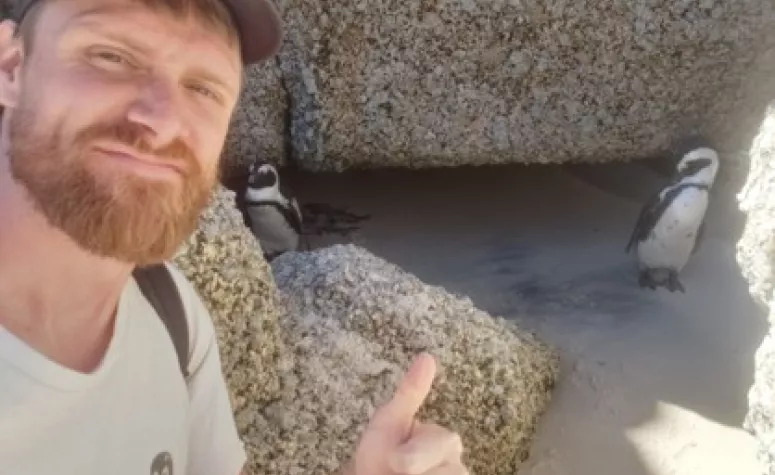
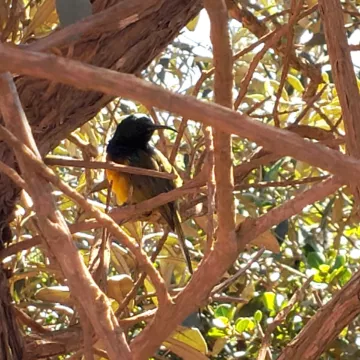
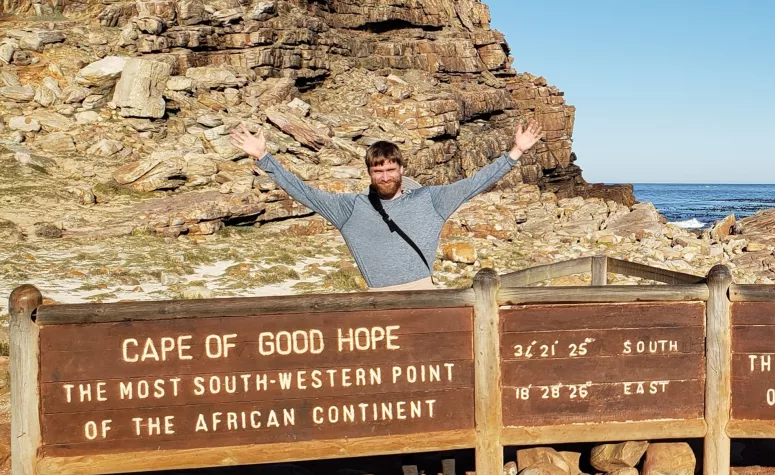
Aside from my time on the UWC campus, I spent most of the remaining time searching for paper wasp nests in and around Cape Town. Professor Couldridge hosted me during my time there and helped me select the best locations to collect from. In all, we decided on various locations including city parks around Cape Town, the University of Cape Town, Stellenbosch University, Kogelberg Nature Reserve, and the vineyards of the Cape Winelands district. In my free time, I also took the opportunity to do some sightseeing. I visited the Cape of Good Hope (Photo 1), the African Penguin Colony at Boulders Beach (Photo 2), the Iziko South African Museum, and Table Mountain National Park. I especially enjoyed seeing the wildlife at these locations, including a variety of native African bird species (Photo 3) and the endangered Mountain Zebra (Photo 4). I had the privilege to see so much of what Cape Town has to offer, which wouldn’t have been possible without the Henry Mitchell Scholarship.
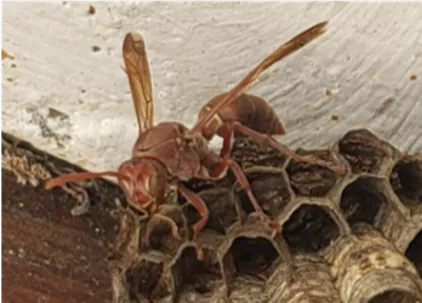
At the conclusion of my search, I was able to collect and extract prey DNA from 36 nests belonging to five paper wasp species, including the European paper wasp. I collected nests of one mystery species on the UWC campus (Photo 5) which were later identified by a wasp expert named Ozren Polašek under the scientific name of Polistes smithii – an infrequently observed paper wasp found across Africa. Polistes smithii was an unexpected but much appreciated addition to my study. Such a diverse collection of paper wasp species enables a more robust test of the role diet plays in the European paper wasp’s invasion success. I plan further collaborations with Professor Vanessa Couldridge at UWC and Professor Ruan Vedltman at Stellenbosch University (South Africa) to publish my results in a journal regarding molecular ecology, invasive species, or entomology. Our results will shed further light on why the European paper wasp has been such a successful invasive species, and what impacts it might have on invaded habitats. I would like to thank the University of Missouri and the University of the Western Cape, as well as everyone that made this life-changing experience possible.