
Title To Be Announced
Speaker: Tia Brodeur, MD, PhD
Assistant Professor of Obstetrics and Gynecology, Mizzou School of Medicine
Division Director, Reproductive Endocrinology and Infertility, MU Health Care
Principal Investigator, Roy Blunt NextGen Precision Health Building
Date: January 26, 2027, noon-1 p.m.
Location:
Roy Blunt NextGen Precision Health Building, Atkins Family Seminar Room
1030 Hitt St, Columbia, Missouri, 65211
Register Here
About the Speaker
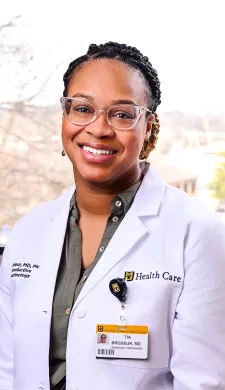
Tia Brodeur, MD, PhD, is a board-certified and fellowship-trained reproductive medicine specialist who provides a full range of services for women and families facing fertility issues. She treats a range of conditions including polyendocrine metabolic ovarian syndrome (PMOS, formerly PCOS), endometriosis, Asherman’s syndrome, secondary infertility and diminished ovarian reserve. She also offers surgery for fallopian tube repair.
Dr. Brodeur has always loved science. She chose to become a doctor after working as a nursing assistant on an infectious disease unit because she loved working as part of a team to help patients.
Dr. Brodeur's Research
Primary ovarian insufficiency (POI) affects approximately 1% of women and has major health implications, such as increased risk of osteoporosis, infertility, and major depressive disorder. There is increasing evidence that many cases of idiopathic POI are caused by autoimmunity that is not well-characterized. Ovarian autoantibodies have been described in autoimmune POI (A-POI) patients and these patients are also more likely to develop autoimmune thyroid or adrenal insufficiency. Despite the clear connection between POI and autoimmunity, there is no current treatment for the oophoritis of A-POI, while therapies for other autoimmune conditions continue to advance. For this reason, understanding the immune microenvironment of the ovary is critical to understanding the pathogenesis of A-POI. We have developed mouse models to understand the function of estrogen signaling in natural killer cells and macrophages and the impact on normal ovarian function, fertility, and protection from viral oophoritis.
About the Discovery Series
The NextGen Precision Health Discovery Series provides learning opportunities for UM System faculty and staff across disciplines, the statewide community and our other partners to learn about the scope of precision health research and identify potential collaborative opportunities. The series consists of monthly lectures geared toward a broad multidisciplinary audience so all can participate and appreciate the spectrum of precision health efforts.
For questions about this event or any others in the Discovery Series, please reach out to the NextGen team.