
"The Dilemma of an Increasing Placebo Effect in Clinical Trials"
Speaker: Aziz Shaibani, MD
Medical Director, Nerve and Muscle Center of Texas
Clinical Professor of Medicine, Baylor College of Medicine
Adjunct Professor of Neurology, Kansas University Medical Center
Date: June 23, 2026, noon-1 p.m.
Location:
Atkins Family Seminar Room
Roy Blunt NextGen Precision Health building
1030 Hitt St, Columbia, MO 65211
REGISTER HERE
View the Recording
60-Second Preview
Description
“When you observe something, you are going to change its outcome. Observation is not a benign thing. Observation is intervention.”
Imagine a Christmas without Santa Claus. The presents never arrive, but everyone is still celebrating. In the festive atmosphere, you feel a familiar cheer.
According to Dr. Aziz Shaibani of the Baylor College of Medicine, the same principle applies for the control group participants in a clinical drug trial. “Even if you don't give them a pill,” he says, “you bring them into an environment conducive for healing” and their expectations alter their experience and shape outcomes.
Since 1938, the U.S. Congress has required the FDA to ensure that new drugs are proven safe. In 1962, that mandate was expanded to include effectiveness as well. The introduction of placebo-controlled trials effectively objectified the field and significantly advanced evidence-based medicine. In addition to their personal experience, physicians now had access to large datasets to guide their prescription of common drugs.
However, according to Dr. Shaibani, this gold-standard model is facing challenges. He notes that modern studies are increasingly failing due to a rising placebo effect – particularly in the United States – in which study participants report health benefits despite not receiving a drug, therapy or other intervention. This phenomenon is contributing to the small number of new pharmaceuticals making it to the market (only about 6.5%).
The foundational premise of these trials assumes that placebos are neutral, and any physiological change in the treatment group must be strictly due to the active agent. “But this premise turned out not to be true because these placebos are not inert substances. They are chemicals,” says Dr. Shaibani. “They produce changes in the brain that may target the same pathways as the active agent.”
By bringing individuals into a clinical environment, researchers inherently increase patients' expectations, which in turn alters their brain chemistry and produces tangible effects. Beyond that, placebo effects can grow more pronounced when participants are told a drug is expensive, when the placebo pill is larger, when they take more pills, or when pills are certain colors. Combine that with the challenge of strict inclusion criteria for many studies and Dr. Shaibani argues a new paradigm is needed to maintain the generalizability of many modern trials.
About the Speaker
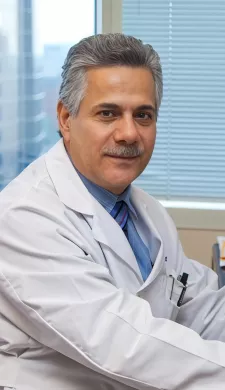
Aziz Shaibani, MD is affiliated with the Baylor St. Luke’s Medical Center, a major teaching hospital of the Texas Medical Center. Dr. Shaibani is a Clinical Professor of Medicine at Baylor College of Medicine, and an Adjunct Professor of Neurology, Kansas University Medical Center. He is also a diplomate of the American Board of Psychiatry and Neurology, Neurophysiology, Neuromuscular Medicine and of the American Board of Electrodiagnostic Medicine. He is also certified in Clinical Neuromuscular Pathology by the United Council of Neurologic Subspecialties.
Dr. Shaibani is a Fellow of the American College of Physicians (FACP), a title granted to physicians with distinguished achievements in Internal Medicine, and Fellow of the American Academy of Neurology, American Neurological Association, and an active member of the American Medical Association, Texas Medical Association, Texas Neurological Society, and Harris County Medical Society. Dr. Shaibani co-authored several book chapters, edited and co-edited five books, published many papers in peer reviewed journals and presented talks to local, national, and international neurology and neuromuscular meetings. His teaching book, A Video Atlas of Neuromuscular Disorders won two prestigious international prizes. The third Edition was released last year.
Dr. Shaibani is a past president of the Texas Neurological Society and past vice president of the neuromuscular section of the American Academy of Neurology and is the Course Director for the Annual Neuromuscular Seminar held since 2015.
About the Discovery Series
The NextGen Precision Health Discovery Series provides learning opportunities for UM System faculty and staff across disciplines, the statewide community and our other partners to learn about the scope of precision health research and identify potential collaborative opportunities. The series consists of monthly lectures geared toward a broad multidisciplinary audience so all can participate and appreciate the spectrum of precision health efforts.
For questions about this event or any others in the Discovery Series, please reach out to Mackenzie Lynch.