
December 12, 2024 | Discovery Series Seminar

Speaker:
Steven N. Austad, Ph.D.
Distinguished Professor, Protective Life Endowed Chair in Healthy Aging Research
Department of Biology, University of Alabama at Birmingham
Date: December 12, 2024, noon-1 p.m.
Location: Roy Blunt NextGen Precision Health Building, Atkins Family Seminar Room
*Zoom option available
View the recording
60-Second Preview
Description
“We’re the longest-lived mammal that doesn’t live in the ocean. We’re already the champs at aging, but we want to do it even better.”
Why do humans rarely live beyond age 100, when whales can live twice that long and tubeworms can live for millennia? And why is it such a robust feature of human biology that women seem to outlive men, across all times and places? Dr. Steve Austad from the University of Alabama-Birmingham is an influential longevity researcher, author, and science communicator who’s attempting to answer those questions.
“I’ve identified key species throughout nature that age more successfully than humans do,” he said. “We really need to figure out how they make that heart beat for 500 years.”
In his talk on December 12, he’ll discuss how we can go about developing therapies to treat aging as though it were a disease process, a strategy that is already being tested successfully in the lab. The question is: is one sex likely to benefit more from a given therapy? And if so, how can we tailor our approach to each individual?
One of the most robust features of human biology is that women live longer than men. Why is that? Is it because they resist diseases of later life better? Is it due to greater risk-taking behavior by men? Is it an artifact of modern industrial civilization? If not – and the answer to all of these questions is “no” – then what is it due to? Do their longer lives mean that women are in general healthier than men? Again, the answer is “no.” Finally, as we develop therapies to treat aging as if it were a disease extending our health span, and there are now dozens of ways to do this successfully in experimental animals, is one sex likely to benefit more than the other? All of these questions and more will be answered during the course of this lecture.
About the Speaker
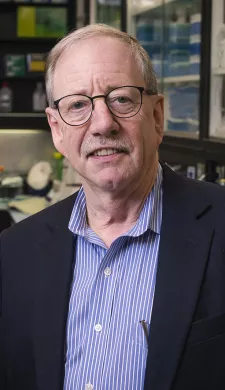
Dr. Austad is a Distinguished Professor and Protective Life Endowed Chair in Healthy Aging Research of the Department of Biology, University of Alabama at Birmingham and Scientific Director of the American Federation for Aging Research. In addition, he directs the NIH-supported UAB Nathan Shock Center of Excellence in the Basic Biology of Aging, one of only six such Centers in the United States. He is also the Co-director of the Nathan Shock Centers Coordinating Center and serves on the Executive Committee of the National Institute on Aging’s Research Centers Collaborative Network.
His current research seeks to understand the underlying causes of aging with a long-term goal of developing medical interventions that slow the age-related decay in human health. Dr. Austad is the author of more than 200 scientific peer-reviewed publications covering nearly every aspect of aging from cells to societies. Dr. Austad is a fellow of the American Association for the Advancement of Science, and of the Gerontological Society of America. He has received multiple prestigious awards for his research work.
About the Discovery Series
The NextGen Precision Health Discovery Series provides learning opportunities for UM System faculty and staff across disciplines, the statewide community and our other partners to learn about the scope of precision health research and identify potential collaborative opportunities. The series consists of monthly lectures geared toward a broad multidisciplinary audience so all can participate and appreciate the spectrum of precision health efforts.
For questions about this event or any others in the Discovery Series, please reach out to the NextGen engagement team at nextgen@umsystem.edu.