
"Curiosity-Driven Innovation in a Complex World"
Speaker: Sandra Magnus, Ph.D.
Former NASA Astronaut
Former Executive Director, American Institute of Aeronautics and Astronautics
Professor of the Practice, Materials Science & Engineering, Georgia Tech University
Principal, AstroPlanetview
Date: March 13, 2026, 8:45am - 9:45am.
Location: The Havener Center
Missouri University of Science and Technology
1346 N Bishop Ave, Rolla, Missouri
 Register Here
60-Second Preview
Description
When something goes wrong in space, there is no room for misunderstandings. On the International Space Station (ISS), astronauts from different disciplines, cultures, and countries must work seamlessly together while orbiting 250 miles above Earth. Their ability to do so highlights a central truth about modern problem-solving: innovation thrives when people can understand multiple perspectives and learn to communicate across them.
Dr. Sandra Magnus, a former NASA astronaut and Missouri S&T alumna, has spent her career living this principle. Her work spans physics, engineering, space operations, and national science leadership, all guided by a deep commitment to continual learning. As she explains, “lifelong learning is all about expressing and acting on your curiosity.” This philosophy has shaped her path ever since she first dreamed of becoming an astronaut in middle school.
Magnus was selected into the 1996 class of NASA astronauts and went on to fly three missions to the International Space Station. Her first mission was in 2002 as a mission specialist. She returned in 2008 for a four and a half month stay as a flight engineer, then travelled there once more in 2011 on the final mission of the space shuttle program. In total, she spent 187 days in orbit.
Life aboard the ISS requires astronauts to be both specialists and generalists. "You have to be comfortable doing a lot of things,” Magnus said. During her missions, Magnus rotated through an extraordinary range of responsibilities: conducting scientific experiments, performing maintenance, troubleshooting the computer networks, operating robotic systems, managing logistics and inventory, and participating in public outreach. The breadth of this work reflects the complexity of the ISS itself, as it is a global engineering partnership where flexibility, communication, and interdisciplinary thinking are essential for success.
After retiring from NASA, Magnus carried her curiosity-driven mindset into a series of influential leadership roles. She served as the executive director of the American Institute of Aeronautics and Astronautics and later became the top engineer for the U.S. Department of Defense’s research and engineering office. Next, she worked as the Chief Engineer on a U.S. Department of Commerce project to establish a space traffic coordination system.
By blending technical expertise with a commitment to learning and collaboration, Magnus shows that innovation is not just a matter of technology—it depends on people. Her career reflects a belief that the future of science will be shaped not only by what we build, but by the team that builds it.
About the Speaker
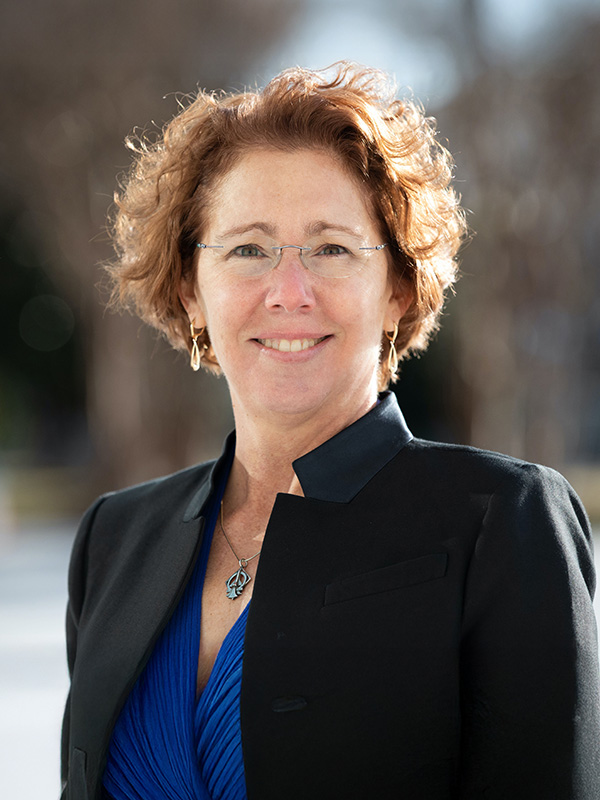
Dr. Sandra H. “Sandy” Magnus is the Principal at AstroPlanetview, LLC and a part-time Professor of the Practice at Georgia Tech. Most recently she was employed by MITRE to act in the capacity of a “temporary government employee” as the Chief Engineer to establish the Traffic Coordination System for Space in the Office of Space Commerce in the Department of Commerce.
Dr. Magnus retired from federal service as the Deputy Director of Engineering in the Office of the Secretary of Defense for the Undersecretary of Research and Engineering. In that role she served as the “Chief Engineer” for the DoD, establishing engineering policy, propagating best practices, and working to connect the engineering community across the department. Prior to joining the DoD, she served as the Executive Director of the American Institute of Aeronautics and Astronautics (AIAA), the world’s largest technical society dedicated to the global aerospace profession.
Selected to the NASA Astronaut Corps in April 1996, Dr. Magnus flew in space on the STS-112 shuttle mission in 2002, and on the final shuttle flight, STS-135, in 2011. In addition, she flew to the International Space Station on STS-126 in November 2008, served as flight engineer and science officer on Expedition 18, and returned home on STS-119 after four and a half months on board. Following her assignment on Station, she served at NASA Headquarters in the Exploration Systems Mission Directorate. Her last duty at NASA, after STS-135, was as the deputy chief of the Astronaut Office.
Before joining NASA, Dr. Magnus worked for McDonnell Douglas Aircraft Company from 1986 to 1991, as a stealth engineer. While at McDonnell Douglas, she worked on internal research and development and on the Navy’s A-12 Attack Aircraft program, studying the effectiveness of radar signature reduction techniques. She is a Fellow of AIAA, a member of the National Academy of Engineering and has been inducted into the Astronaut Hall of Fame.
About the Discovery Series
The NextGen Precision Health Discovery Series provides learning opportunities for UM System faculty and staff across disciplines, the statewide community and our other partners to learn about the scope of precision health research and identify potential collaborative opportunities. The series consists of monthly lectures geared toward a broad multidisciplinary audience so all can participate and appreciate the spectrum of precision health efforts.
For questions about this event or any others in the Discovery Series, please reach out to Mackenzie Lynch.
Reviewed 2026-02-03