By Harper Snyder | January 30, 2026
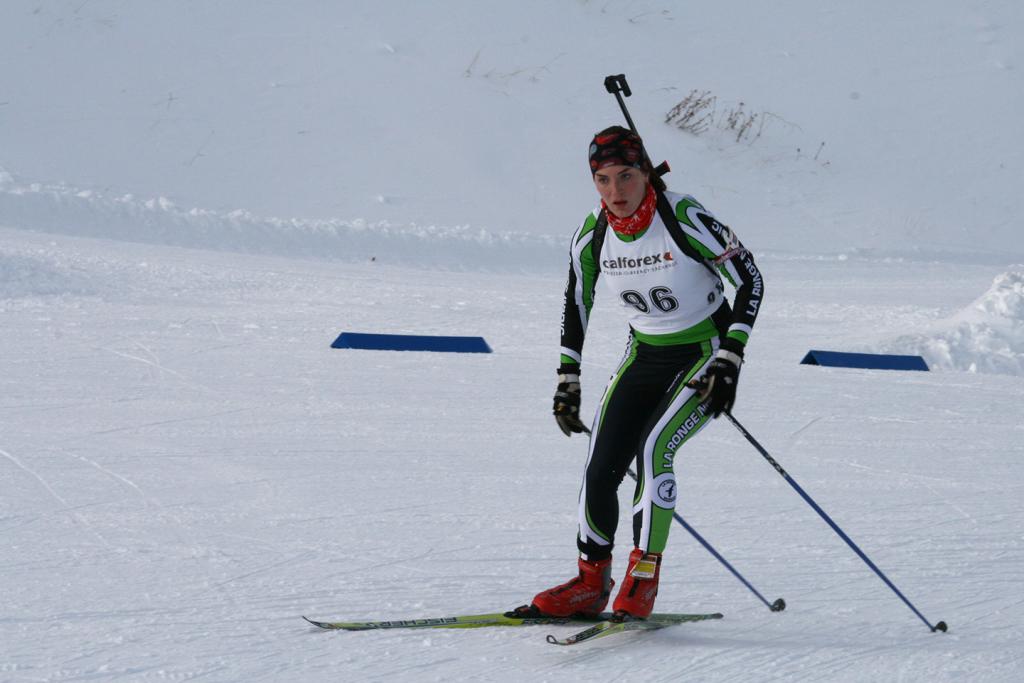
Natasha competes in the skiing portion of a biathlon in 2010.
For Natasha Boyes, the biathlon was both the point of origin and arrival in her path to becoming a scientist. Growing up in Saskatchewan, Boyes was drawn to the biathlon’s unique challenge: pairing the endurance and speed of cross-country skiing with the precision and control of rifle shooting. “There is no better feeling than hitting the target in the middle of a race,” Boyes recalls. “It is so fun.” It was a world she never expected to re-enter after moving out of Canada, yet years later, the sport would form the unexpected backdrop of her first professional role as a scientist.
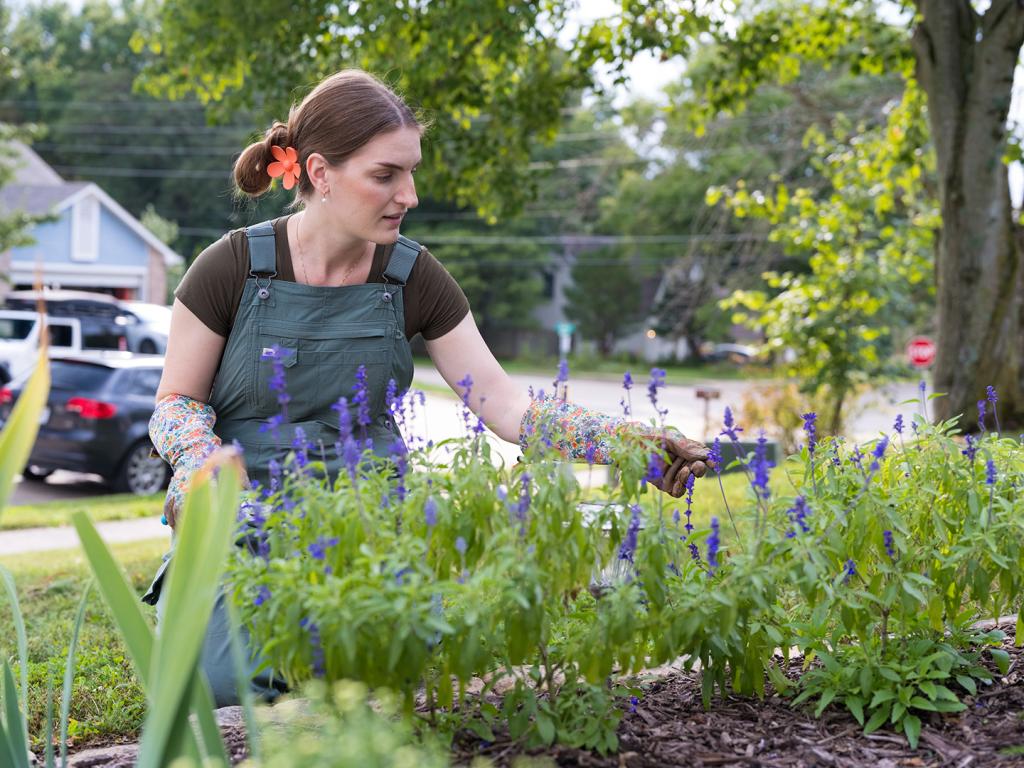
Natasha tends to her garden at her home in Columbia in 2025. Photo by Harper Snyder.
Driven by her passion for athletics, Boyes studied kinesiology at the University of Saskatchewan in pursuit of a career as a physical therapist. However, a part-time research job, initially taken to bolster her graduate school applications, ignited an unexpected new passion. She became fascinated with the scientific process, realizing that everything she learned during her undergraduate education began as a piece of data once discovered by scientists and researchers much like herself. “We each have the power to contribute our knowledge about the world,” Boyes said.
This revelation led Boyes to a pivot from physical therapy to academia. She pursued a master’s degree, followed by a PhD at the University of Saskatchewan. Boyes’s research investigates cardiovascular physiology and the mechanisms of heart disease with an emphasis on sex-differences and the therapeutic impacts of exercise. Most recently, she has been exploring peripheral blood flow regulation during exercise in patients with heart failure and how elevated sympathetic nervous system activation impacts heart function.
While finishing her PhD, a conversation at an experimental biology conference introduced her to a research group at the University of Missouri. This connection, a testament to the power of networking, led to an interview, a subsequent fellowship offer, and a move south for Boyes and her family. She now works as a postdoctoral fellow in the lab of Jacqueline Limberg, an associate professor of nutrition and exercise physiology in the College of Agriculture, Food and Natural Resources and the School of Medicine.
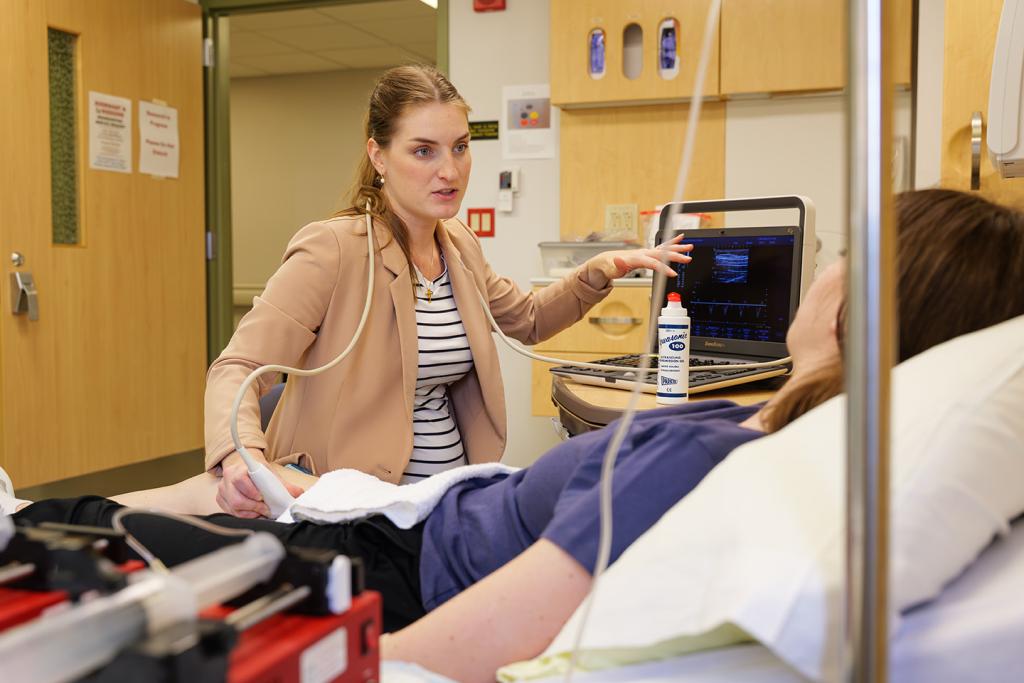
Dr. Boyes explains a study protocol to a research participant in the Clinical Translational Science Unit at University Hospital in Columbia. Photo by Harper Snyder.
Limberg proved to be, in Boyes’s words, an “absolutely phenomenal mentor and human,” and her guidance was transformational. Under this mentorship, Boyes thrived, earning prestigious honors including an American Heart Association Postdoctoral Fellowship and a place in the inaugural NextGen Postdoctoral Fellowship cohort. Knowing Boyes’s goal was a faculty position, Limberg actively advocated for her, assisting with networking and interview preparation. Her support paid off when she identified a perfect fit for Boyes: a faculty position in the Human Integrative Physiology Exercise Research Lab (HIPER) at Marquette University, Limberg’s alma mater.
The role felt meant to be. It would allow her to continue her research in human physiology and cardiovascular health, translating findings to help patients with heart failure. Furthermore, Boyes had been building a collaboration with a researcher from the Medical College of Wisconsin and astoundingly, her future chair was already one of his closest collaborators. It was the ultimate confirmation.
|
|
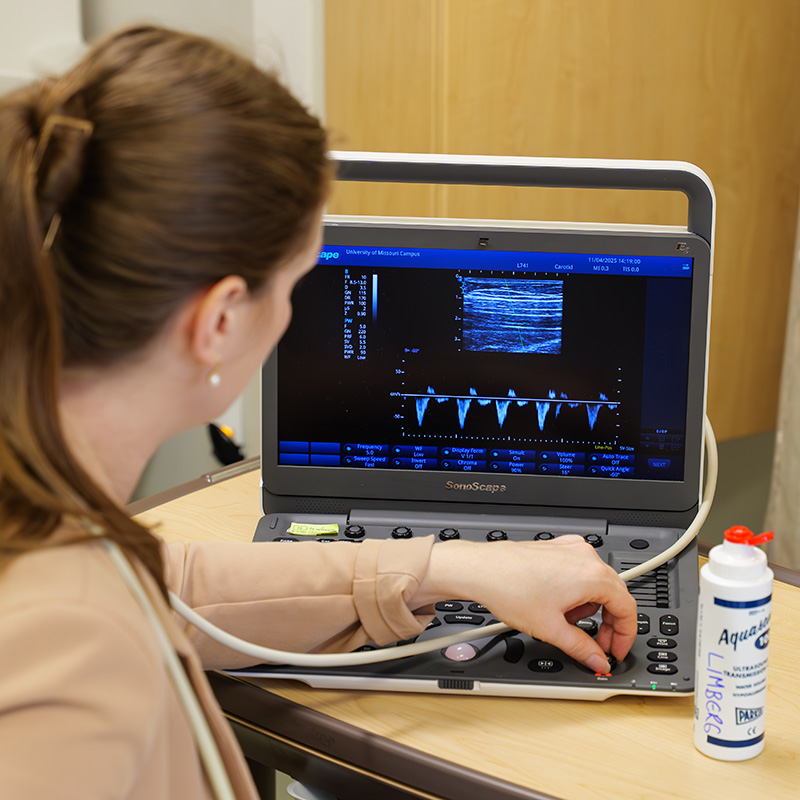 |
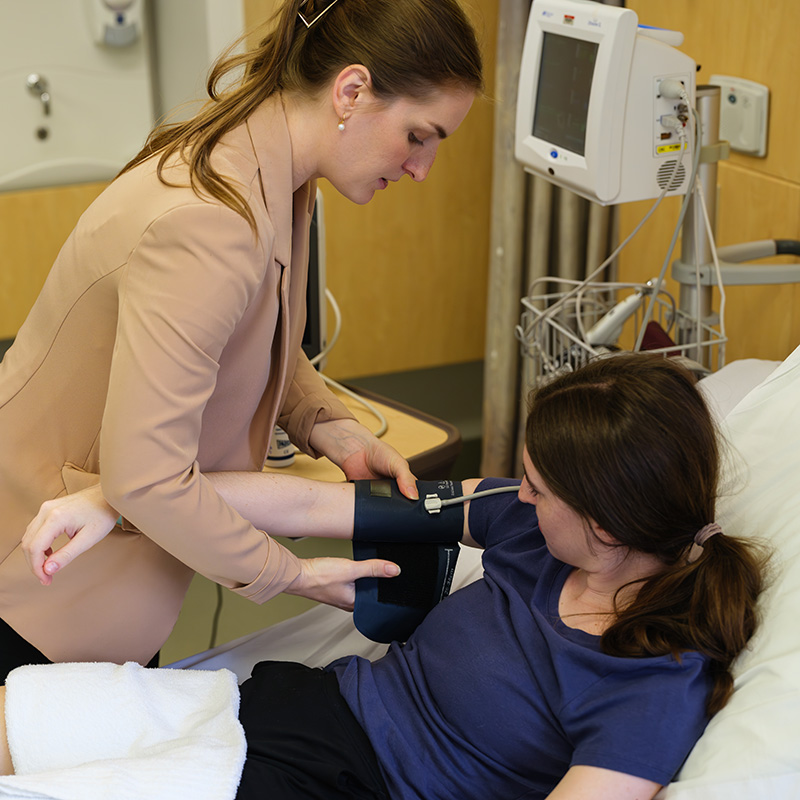
Dr. Boyes preps a study participant in the Clinical and Translational Science Unit at University Hospital in Columbia.
After a successful interview, Boyes celebrated in her typical fashion by heading out to her garden. When the official offer came, Natasha made one last trip to Milwaukee before accepting, this time with her family in tow. She, her husband, and their two children were a package deal, so she ensured they were a part of the decision. When an interviewer of hers—a fellow biathlete—saw her resume and excitedly told her about Milwaukee’s active biathlon community, she knew she was in the right place. It was a full circle moment that connected her beginnings as a young biathlete in Canada to her next chapter as a leading scientist in Milwaukee—with Mizzou marking a transformative point along the way.
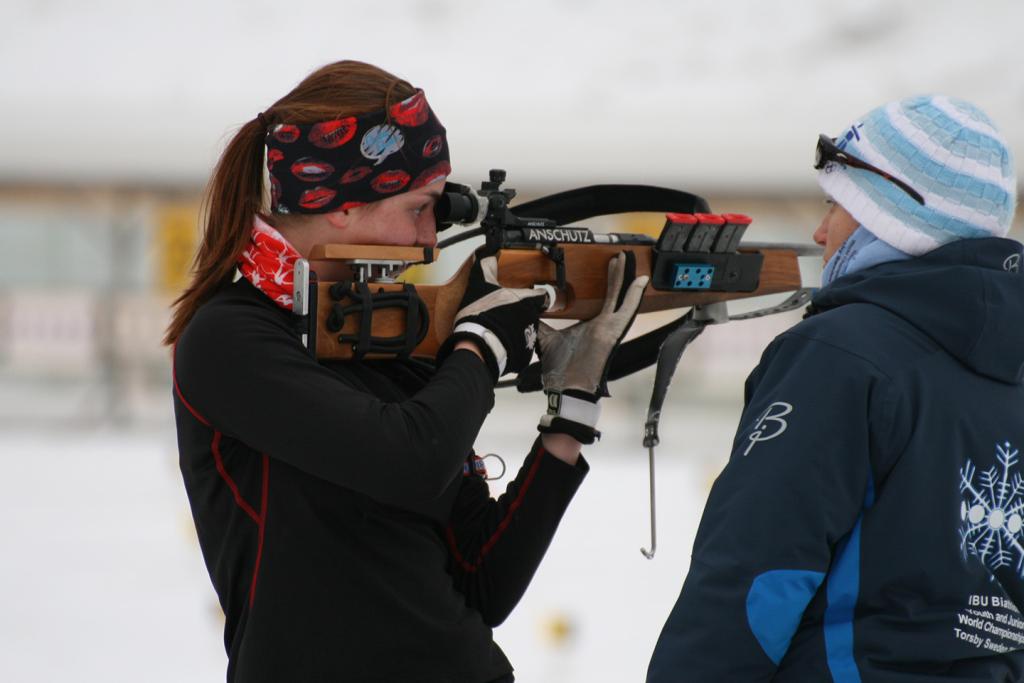
Natasha stares down her sight during the shooting portion of a biathlon in 2010.
Reviewed 2026-02-13