Good afternoon,
The goal of this email is to provide a regular source of useful information to staff and faculty of the University of Missouri System regarding the federal government and higher education. We have put together a list of news articles that will keep you informed of the actions taken by the executive, legislative, and judicial branch of government. These articles are meant to be informative and are not a reflection of the views or stance of the system regarding these issues.
If you would like more information regarding any of the stories we share, or if you have any suggestions, please feel free to contact Dusty Schnieders schniedersd@umsystem.edu and/or Emily Lucas el59bz@umsystem.edu.
Follow UM Government Relations on Twitter: @UMGovRelations
Capitol Hill News
The House of Representatives has passed all 12 FY26 appropriations bills, accomplishing the chamber’s full constitutional duty under regular order despite a one seat majority. Passage of the final minibus marks a major victory for House leadership. The House is now aiming for Senate action ahead of the January 30 deadline to avert a government shutdown.
Key highlights include:
- Defense: The FY26 Defense bill provides $838.7 billion for the Department of Defense, $8.4 billion above the President’s budget request. Funding includes $145.9 billion for research, development, testing, and evaluation, an increase of $4.7 billion over FY25, supporting next generation technologies and maintaining U.S. military readiness.
- Labor HHS Education: The bill provides $47.2 billion for NIH and $1.5 billion for ARPA H, rejecting proposed administration cuts to biomedical research. It also maintains the Pell Grant maximum at $7,395 for AY 2026–27 and sustains funding for Federal Work Study, FSEOG, and TRIO programs. The Institute of Education Sciences receives $790 million.
- Indirect Costs Protections: Both the Defense and Labor HHS Education bills include statutory language preventing agencies from arbitrarily capping negotiated indirect cost rates. NIH and DoD are directed to apply negotiated rates in the same manner as prior fiscal years and are prohibited from using FY26 funds to modify those rates. Explanatory statements further direct agencies to engage with Congress on potential improvements, including consideration of the FAIR model.
Completing FY26: Committee Releases Conferenced Defense, Homeland, LHHS, and THUD Bills
House Appropriations Committee – January 19, 2026
House appropriators passed the conferenced FY26 funding package covering Defense, Homeland Security, Labor-HHS-Education, and Transportation-HUD, completing all twelve appropriations bills under regular order. The package reflects bicameral negotiations and prioritizes military readiness and innovation, border and homeland security, biomedical research and workforce development, and transportation and infrastructure investments.
Defense
Homeland Security
Congressionally Directed Spending
Labor, Health and Human Services, Education, and Related Agencies
Congressionally Directed Spending
Transportation, Housing and Urban Development, and Related Agencies
Congressionally Directed Spending
Chip export bill advances in House Foreign Affairs
Roll Call – January 21, 2026
A House committee took a step toward restricting exports of certain artificial intelligence semiconductor chips to China, a policy proposal that has a prominent opponent in the Trump White House. The House Foreign Affairs Committee voted to advance a bill that would call for the Commerce Department to require a license for the export, re-export or in-country transfer of certain chips. The markup came after the Trump administration said it will allow sales of Nvidia H200 chips to China.
Delegation News
Missouri data center growth fuels energy debate
KOAM – January 21, 2026
Missouri leaders are raising concerns as more data centers are built across the Midwest, with questions growing about transparency and the potential impact on electricity costs for consumers. Supporters say they bring investment and jobs, while critics warn they place heavy demands on the power grid. U.S. Sen. Josh Hawley, R-Missouri, believes residents should not be left paying higher utility bills as large corporate projects move forward.
Joplin council votes to pass annexation, rezoning land for potential AI data center
KZRG – January 21, 2026
The Joplin City Council approved annexation and rezoning for land that could host a future AI data center, emphasizing that the vote does not guarantee immediate development. The decision drew unusually high public attendance. Rep. Eric Burlison highlighted potential benefits, noting that data centers often fund major infrastructure upgrades, help stabilize power demand through agreements with utilities, create jobs, and can help reduce long term cost pressures for the community.
House Passes Alford’s AI for Main Street Act
Congressman Mark Alford Press Release – January 20, 2026
The House passed Rep. Mark Alford’s bipartisan AI for Main Street Act, legislation aimed at ensuring small businesses are not left behind as artificial intelligence becomes more widely adopted. The bill directs the Small Business Administration’s Small Business Development Centers to help entrepreneurs evaluate, understand, and responsibly deploy AI tools through training, technical assistance, and outreach. As Rep. Alford noted, “Main Street stands at the doorstep of a major transformation because the AI revolution isn’t just coming, it’s already here,” emphasizing that the legislation is designed to empower entrepreneurs and job creators with the resources they need to use AI effectively while strengthening competitiveness and economic growth.
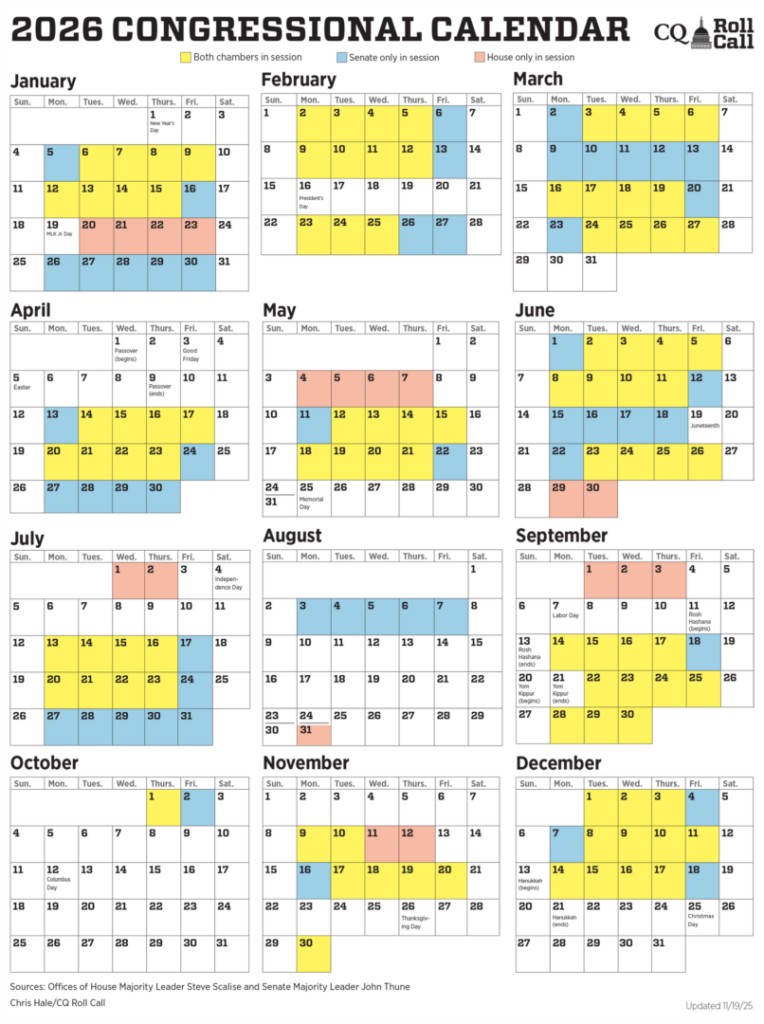
Congressional Calendar
Reviewed 2026-01-26