Visit Report: Submitted December 2020
Organizational Name:
The Curators of the University of Missouri
Project Title:
Border Crossing Sistahs: A Study of Black Female Olympic Hopefuls in Cape Town
Project Director:
Dr. Ty-Ron Douglas
Visit Report: Submitted December 2020 Organizational Name The Curators of the University of Missouri Project Title Border Crossing Sistahs: A Study of Black Female Olympic Hopefuls in Cape Town Project Director Dr. Ty-Ron Douglas Home Institution Educational Leadership & Policy Analysis Department, University of Missouri—Columbia Hosts & Partners Mandla Gagayi (Director of Sports Administration/Athletic Director at UWC) Marion Keim (Director Interdisciplinary Centre for Sports Science & Development, UWC) Prof. Rouaan Maarman (Educational Studies Head of Department at UWC) Prof. Andre Travill (Department of Sport, Recreation, & Exercise Science Head of Department) Next Level Living (Cape Town), Inc Host Institution University of Western Cape ACKNOWLEDGEMENT I would like to acknowledge and thank Dr. Rod Uphoff and the leaders and supporters of the UMSAEP program. Once again, Dr. Uphoff’s leadership and assistance in facilitating my visit was exemplary. Patient advisor and project advocate, Professor Uphoff ensured not only ensured that my visit was a success, but he also helped me to navigate the DC portion of the film process and our efforts to find videographers who could accompany us for the project. I am also grateful for the support and assistance of Mandla Gagayi (Director of Sports Administration/Athletic Director at UWC). Once again, Mr. Gagayi and his team were very kind and accommodating. VALUE OF THE UM/ UWC EXCHANGE PROGRAM The UM/ UWC Exchange Program is a brilliant and vital partnership. Having the opportunity to interface with and build research and relational partnerships with colleagues at UWC is a tremendous privilege and an important initiative. There are synergistic connections between the two institutions that must continue to be developed and leveraged as we seek to find solutions to global dilemmas. Having the opportunity to learn about the experiences of two Olympic hopefuls has been an invaluable and rare experience to study, connect and consider diasporic realities in unprecedented ways. PROPOSAL SUMMARY The goal of the Border Crossing Sistahs project was to build on the current focus on the well-being of women in South Africa and the interests in the 2021 Olympics to center the journeys and voices of two amazing women, who in spite of significant odds are pursuing their Olympic dreams and modeling the possibilities that can exist for South African girls and women. This focus guided the documentary process and the successful completion of the deliverable. LINK TO DOCUMENTARY TRAILER https://www.youtube.com/watch?v=LG2LMT2S2qA&feature=youtu.be DISTRIBUTION PLAN My goal is to now have the documentary installed in South Africa. The Covid-19 pandemic delayed the 2020 Olympics, which gave us more time to get the documentary finished. It has also complicated some of installation plans for the documentary. I would welcome any assistance in finding appropriate outlets to install the documentary. CONTEXT & INTRODUCTION TO THE ORGANIZATION APPLYING During my first visits to South Africa in 2015 and 2017, I was reminded of the intersections between politics, sport, race, identity, education, and the continued healing of the country. I learned that sport is central to the lives of many South Africans. It is no secret that former President Mandela sought to use sport to help unify the country. Notably, the image of Nelson Mandela delivering the 1995 Rugby World Cup trophy to former captain Francois Pienaar is seen by some as the most significant image in South African sporting history (Smith, 2013). Similarly, hosting the 2010 FIFA World Cup was a significant event for South Africa and then President Mandela. I sought to learn what this all means in a post-Mandela South Africa and I gleaned many insights as reflected in my UMSAEP final report and in the published journal article in the Journal of Negro Education that highlighted the experiences of Mandla Gagayi, University of Western Cape Athletic Director. Specifically, I explored the implications and perspectives of Black male South African athletes who must form identities and define success in this context. This was an objective of the study I commenced during the summer of 2017 at the University of Western Cape. I also wanted to explore the persistence of racialized complexities, sport, and politics in South Africa—even as the South African rugby team prepares for the 2015 World Cup, and discussions of racial representation and the absence of Black or colored players on this year’s team persist. As a faculty member at the University of Missouri (MU) who is committed to social justice and the uplift of all people, I am eager to continue to collaborate with my colleagues at the UWC to better understand the experiences of Black female South African athletes/ students through digital storytelling. I have led projects of similar size and scope for organizations like the NCAA, the National Basketball Players Association, and other funded studies and documentaries. Specifically, in this project, I wanted to learn about and share their journeys, aspirations, and how their life stories impact how they see themselves and their experiences. The timing of this proposed project was particularly significant in light of the violence toward and oppression of women in South Africa that has been punctuated by the untimely killings of a female student at both UWC and the University of Cape Town (UCT). During my 2017 visit to Cape Town, data from the study participants revealed gendered tensions as manifested by resistance movements like the “Men Are Trash” movement, which South African women were using to push back on the infringements of patriarchy. AMERICAN CONTENT While U.S. based scholars have examined important variables related to the identities of Black male student-athletes (Adler & Adler, 1991; Beamon & Bell, 2006; Edwards, 2000; Harrison, Harrison, & Moore, 2002), more work is needed to hear and share the voices of Black female athletes. Of particular interest to U.S. based audiences and those interested in intersections between the U.S. and South Africa, the first South African athletes to compete in the Olympic games occurred in 1904 in St. Louis, less than 125 miles from my university, the University of Missouri—Columbia. Two of these participants—Len Taunyane and Jan Mashiani—were Black men who participated in the marathon and were the only Black South African athletes to represent their country until apartheid ended. We do not know much about ‘the village’/ the community and experiences that produced these two athletes. But we do know that their pathway to St. Louis in 1904 was laden in the oppressive reality that both Taunyane and Mashiani were Boer War veterans who had been “taken prisoner by the British” and happened to be in St. Louis for the World’s Fair where they “reenacted battle scenes at the fair.” Taunyane’s journey to and during the marathon was arduous: he would finish 9th, having run barefoot and despite being “chased nearly a mile off course by aggressive dogs” (Wikipedia, as drawn from the work of Cronin, 2010 and O’Toole, 2016). Clearly, the journeys of Black people across the diaspora and, in particular, South Africans to and through the Olympics has been fraught with obstacles that intersect with the United States. As a nation that seeks to be a leader in equality for women—particularly in sport as exemplified through the accomplishments like the U.S. women’s soccer team—this project can help connect the dots between two nations that have an explicit historical Olympic connection (1904 Olympics) and two women athletes seeking to make their mark contemporarily, one of whom just finished a yearlong post-graduate year in Washington, DC. PROJECT GOALS, OBJECTIVES, & TIMELINE The journeys of Black South African female athletes come with additional layers on complexity. Building on this scholarship and the aforementioned commitment to social justice, using digital story telling the goal of this documentary is to better understand Black female student-athletes, their aspirations and experiences related to healthy identity development in their personal/ educational/athletic journeys, and their pathways as 2021 Olympic hopefuls within the current political and social climate. The documentary was guided by the following questions: 1) How do Black female athletes in Cape Town form identities and define success? and 2) How do the life histories of Black female athletes in Cape Town contribute to their identities, decisions, and journeys as women in South Africa? 3) How are the life histories, identities, and definitions of success of Black female athletes in Cape Town impacted by the current political and social climate in South Africa (e.g. current uprising and resistance movements; efforts to reach the 2021 Olympic Games)? Initial proposed travel dates for filming: November 29, 2020 – December 9, 2020 CONCEPTUAL FRAMEWORK: BLACK SISTAHS CROSSING OVER This research was informed by border theory as the conceptual framework to better understand Black female athlete identity in Cape Town. Border theory was chosen for its flexibility; it provides scholars with language and tools to navigate the edges and territory of complex terrain and identities. In general, identity construction is a complex and contested process (Gause, 2008; Giroux, 2005) that includes, but is not limited to, an amalgamation of difference across and within a continuum of races, genders, social classes, sexual orientations, religions, (dis)abilities, languages, political allegiances, and other culturally and historically contextualized markers (Butler, 1999; Gause, 2008). At times, identity markers can function somewhat separately from and in concert (or conflict) with other identity markers (e.g. student-athlete), as borders are encroached, pushed, redefined, and reestablished individually, ideologically, and institutionally (Douglas, 2012). This is one of the most significant benefits of using border crossing theory to study how Black female student-athletes at UWC form identity and define success: border theory encompasses multifaceted approaches that can use hybrid positionalities (e.g. student-athlete, black female, African-American) to problematize and reconfigure how identities are formed and power is distributed within and across difference (Douglas, 2012). Black females—like females of other racial backgrounds—are charged with crossing over many borders as they transition to womanhood. However, prior research on Black female identity development (e.g. Crenshaw’s intersectionality) suggests that negotiating the transition to womanhood as a Black female while simultaneously managing the expectations and oppressive forces of various identities can be a complex crossing. Border theory allows researchers to recognize and rupture the “epistemological, political, cultural, and social margins that structure the language of history, power, and difference” (Giroux, 2005, p. 20). Border theory helped us account for the “entangled web of contradiction” (Edwards, 2000) while also creating space for our participants to name how their identities, histories, and experiences inform how they see themselves, success, and their futures. image Border Crossing Black Female Experience Identity Formation Black Female Identity Leadership Development Institutional Change Fig. 1. Exploring the Identities, Journeys, & Success of Black Female Athletes PROJECT ACTIVITIES & METHOD TARGET AUDIENCE AND PARTICIPANT INTERVIEWS As part of this documentary project, the researchers used digital storytelling to conduct individual interviews with two Black female South African athletes and Olympic hopefuls (Glesne, 2006). We also interviewed their parents, athletic director, former coaches, center directors on their campus, and their partners (boyfriends). A semi-structured interview protocol will be used during the interviews to explore their personal and educational journeys, their cultural and racial identities, and their perceptions of success in the current political and Olympic preparation climate. To recruit these athletes, the documentary director drew on his relationships in the athletic department at UWC to work with two sisters who are both Olympic hopefuls. The investigators expect to collect 20-25 hours of documentary interview data from the women and their family members, coaches, partners, and affiliates. The target audience as it relates to viewership is the South African and wider African community, and audiences across the globe who are interested in women’s uplift, the Olympics, black women, and sport more generally. OBSERVATIONS The film makers observed and recorded participants in spaces in and around the athletic department and practice fields, as context for the oral histories they construct and share during our interviews or interactions. Observations were primarily be used as context and b-roll to better interpret and inform the information shared in the interviews. Observation field notes were recorded in a journal. MONITORING & EVALUATION PLAN Thematic analysis as outlined by Glesne (2006) was being used to analyze the film footage. The steps of the thematic analysis process are (1) collect data; (2) coding and categorizing the data; (3) searching and synthesizing for patterns; (4) and interpret the data. Specifically, data from the interviews will be video recorded, analyzed, and coded through attentiveness to the participant’s selectivity, slippage, repetition, and “the pattern[s] of their own priorities” (Casey, 1993, p. 19). Participants’ narratives will be assessed based on the topics, ideas, people, recollections, and stories that are privileged during the interviews. The film director and editor were attentive to the dynamics that were omitted by the participants. Film data analysis proceeded inductively to find commonalities among the participants. In pursuit of validity in this documentary, the investigators allowed for and examined “competing explanations and discrepant data,” so that the documentary affirms the knowledge, perspectives and experiences of the Black females who participate rather than being a reflection of the director’s own biases. Small focus group feedback was used to assess each iteration of the documentary’s development. RELEVANT ACCOMPLISHED WORK BY THE DIRECTOR FROM 2017 STUDY RESEARCH: EMERGING THEME & PRELIMINARY ANALYSIS Men are Trash. The abuse and mistreatment of women in South Africa has been a major topic of concern. News reports of a woman who was burned to death by a man were reverberating around Cape Town during my time collecting data. The Men are Trash movement speaks to the disgust and frustration of women in South Africa who will no longer remain quiet about the problematic masculinities that infringe upon their health and wellbeing. Many black male study participants discuss the prevalence of rape and abuse of women, and the associated tensions that exist in discussing and dismantling these and other gendered issues. KEY PERSONNEL (in alphabetical order)/ PROJECT PARTNERS/ ACCOMPLISHED WORK Project Courtesy Advisor/ Focus Group Member: Javan Cornelius of ShoeShine Media Javan Cornelius is the founder of Shoeshine Media and an international award winning content creator who has worked with some of the most notable experts in the speaking, entertainment, religious, educational, and corporate industries including Dr. Eric Thomas (ET The Hip Hop Preacher), Bill Cosby, The University of Missouri, The CW Network, Public Broadcasting Service (PBS), and a number of personal brands, television, and digital media outlets. Following his own calling of creativity, Javan has proven himself to be a well-rounded Producer, Director, and Editor. He has traveled to more than 10 countries and 20 states, successfully delivering visual media projects to clients while inspiring them to hone their own creative genius and propel to the forefront of the marketplace by utilizing cutting-edge video content to enhance their marketing. Jordan Marushak (a Mizzou film student) served as the editor for the film; Seiler Burr was my audio engineer/ and videographer 2 and Meghan Smith was my camera 1 videographer. Film Director: Dr. Ty-Ron Douglas Ty-Ron M. O. Douglas, PhD., is an associate professor of Educational Leadership and Policy Analysis at the University of Missouri (Mizzou). A sought-after international speaker, thought leader and consultant, he has offered guest commentary for major national networks, including Fox News. His research explores the intersections between identity, community/geopolitical space, and the socio-cultural foundations of leadership, spirituality, and education. The recipient of a NCAA grant to study black male athletes and author of the award-winning book, Border Crossing Brothas, Dr. Douglas’ scholarship has appeared in outlets such as Teachers College Record and The Urban Review. He has two new books, including Campus Uprisings: How Student Activists and Collegiate Leaders Resist Racism and Create Hope (Teachers College Press), which—drawing on uprisings at Mizzou and Andrews University—provides guidance for executive and campus leaders. In addition to interviewing 45 men in less than two weeks in 2017, Dr. Douglas also engage in the following professional activities in Cape Town: I spoke at a local elementary school (Montevideo Primary School), where I arranged and transported UWC student athletes to join me in speaking and building relationships with the children and staff. Consistent with the ethos and programming of my Border Crossing Brothas work, I was intentional about helping the student-athletes cross borders and consider partnerships that would allow them to use their influence for good with the youth of the school and city. Notably, I was introduced the Montevideo Primary School and Principal Timmet during my 2015 visit to Cape Town, when I served as a leader of a College of Education teach abroad summer program. Delivered invited lectures at the University of Cape Town; Heidelberg College, partnership with University of Western Cape Student Athletes; Next Level Living, Inc community event in which I took and introduced University of Western Cape and Heidelberg students to participate and collaborate together; the University of Western Cape. Sports Administration department I created voiceover/ commercial demos for two student athletes, including a female Olympic prospect who sought me out after learning of the work I was doing with the male athletes. I continue to mentor UWC athletes. This has included connecting UWC students with top international speakers like Dr. Eric Thomas who sent a personal video message to some of my study participants who have follow his work and mentioned his name during their interviews with me; one athlete shed a tear after receiving a personal video from Eric “ET” Thomas shortly after our interview session. My previous project in Cape Town has yielded a scholarly publication: In the fall of 2017, I published an article in collaboration with Mandla Gagayi. This article was included as a special feature of a special issue. The citation and article link is below: Douglas, T. M. O., Green, C., Faloughi, R, Rome, S., Shuck, J., Zanders, M., Walton, T., Harris, T. (2017). Rubber-bullets, resistance, and the rise of a young athletic director: A conversation with Mandla Gagayi about #FeesMustFall, #RhodesMustFall, and campus uprisings in South Africa. Journal of Negro Education. 86(3): 356-367. https://www.jstor.org/stable/10.7709/jnegroeducation.86.issue-3 MARKETING & MEDIA PLAN Border Crossing Sistahs is a short documentary film that will display using production mapping/ video art installation in South Africa, as well as distribution in the United States. Public displays have become more difficult due to Covid-19. Using the documentary book trailer and our networks across the film and educational landscapes, I plan to use a robust and comprehensive social media campaign to garner interest in this project’s release and final product in 2021. Additionally, I continue to explore showings at major sport organizations and universities in Cape Town and the United States as a platform for audience engagement and access. We will continue to pursue opportunities with outlets such as ESPN 30 for 30, PBS, Netflix, and the OWN Network for distribution, as well as opportunities for the film to be shown in schools in Cape Town as curriculum for the next generations of students to be inspired. FUTURE FOUNDING & SUSTAINABILITY Future funding for this project and its sustainability is grounded in Dr. Douglas’ research agenda and the larger previous and ongoing projects that he is engaged in around Border Crossing Brothas/ Sistahs in academic and media spaces across the diaspora. This current project will potentially be used to solicit additional funding for a larger documentary series. REFERENCES Adler, P.A., & Adler, P. (1991). Backboards and blackboards: Colleges and role engulfment. New York: Columbia University Press. Beamon, K., & Bell, P. (2006). Academics versus athletics: An examination of the effects of background and socialization on African-American male student-athletes. The Social Science Journal, 43, 393-403. Beasley, S., Miller, I. S. K, & Cokley, K. (2014). Academic and psychosocial development of African American males in PreK-12 settings. In J. L. Moore & C. W. Lewis (Eds.), African American Male Students in PreK-12 Schools: Informing Research, Policy, and Practice. (pp. 1-25). Bingley, UK: Emerald Group Publishing Limited. Butler, J. (1999). Gender trouble: Feminism and the subversion of identity. New York: Routledge. Casey, K. (1993). I answer with my life. New York: Routledge. Cronin, B. (2010). Sports legend revealed: A marathon runner nearly died. Los Angeles Times. Retrieved 28 June 2020 from https://latimesblogs.latimes.com/sports_blog/2010/08/sports-legend-revealed-a-marathon-runner-nearly-died-because-of-drugs-he-took-to-help-him-win.html Edwards, H. (2000). Crisis of Black athletes on the eve of the 21st century. Society, 37, 9-13. Gause, C. P. (2008). Integration matters: Navigating identity, culture, and resistance. Peter Lang. Giroux, H. A. (2005). Border crossings (2nd ed.). New York: Routledge Taylor & Francis Group. Glesne, C. (2006). Becoming qualitative researchers: An introduction (3rd ed.). Boston: Pearson. Harrison, L., Jr., Harrison, C. K., & Moore, L. N. (2002). African American racial identity and sport. Sport, Education, and Society, 7, 121-133. Hatch, J. A. (2002). Doing qualitative research in education settings. Albany: SUNY Press. O’Toole, S. (2016). Story of South Africa’s first black Olympians keeps us guessing. Mail & Guardian Online. Retrieved 28 June 2020 from https://mg.co.za/article/2016-07-07-00-story-of-south-africas-first-black-olympians-keeps-us-guessing/ Melendez, M. C. (2008). Black football players on a predominantly white college campus: Smith, D. (2013, December 8). Francois Pienaar: ‘When the whistle blew South Africa changed forever.’ The Observer. Retrieved from http://www.theguardian.com/world/2013/dec/08/nelson-mandela-francois-pienaar-rugby-world-cupHome Institution:
Educational Leadership & Policy Analysis Department, University of Missouri—Columbia
Hosts & Partners:
Mandla Gagayi (Director of Sports Administration/Athletic Director at UWC) Marion Keim (Director Interdisciplinary Centre for Sports Science & Development, UWC)
Prof. Rouaan Maarman (Educational Studies Head of Department at UWC)
Prof. Andre Travill (Department of Sport, Recreation, & Exercise Science Head of Department) Next Level Living (Cape Town), Inc
Host Institution:
University of Western Cape
Acknowledgement
I would like to acknowledge and thank Dr. Rod Uphoff and the leaders and supporters of the UMSAEP program. Once again, Dr. Uphoff’s leadership and assistance in facilitating my visit was exemplary.
Patient advisor and project advocate, Professor Uphoff ensured not only ensured that my visit was a success, but he also helped me to navigate the DC portion of the film process and our efforts to find videographers who could accompany us for the project. I am also grateful for the support and assistance of Mandla Gagayi (Director of Sports Administration/Athletic Director at UWC). Once again, Mr. Gagayi and his team were very kind and accommodating.
Value of the UM/ UWC Exchange Program
The UM/ UWC Exchange Program is a brilliant and vital partnership. Having the opportunity to interface with and build research and relational partnerships with colleagues at UWC is a tremendous privilege and an important initiative. There are synergistic connections between the two institutions that must continue to be developed and leveraged as we seek to find solutions to global dilemmas. Having the opportunity to learn about the experiences of two Olympic hopefuls has been an invaluable and rare experience to study, connect and consider diasporic realities in unprecedented ways.
Proposal Summary
The goal of the Border Crossing Sistahs project was to build on the current focus on the well-being of women in South Africa and the interests in the 2021 Olympics to center the journeys and voices of two amazing women, who in spite of significant odds are pursuing their Olympic dreams and modeling the possibilities that can exist for South African girls and women. This focus guided the documentary process and the successful completion of the deliverable.
Link to Documentary Trailer
https://www.youtube.com/watch?v=LG2LMT2S2qA&feature=youtu.be
Distribution Plan
My goal is to now have the documentary installed in South Africa. The Covid-19 pandemic delayed the 2020 Olympics, which gave us more time to get the documentary finished. It has also complicated some of installation plans for the documentary. I would welcome any assistance in finding appropriate outlets to install the documentary.
Context & Introduction to the Organization Applying
During my first visits to South Africa in 2015 and 2017, I was reminded of the intersections between politics, sport, race, identity, education, and the continued healing of the country. I learned that sport is central to the lives of many South Africans. It is no secret that former President Mandela sought to use sport to help unify the country. Notably, the image of Nelson Mandela delivering the 1995 Rugby World Cup trophy to former captain Francois Pienaar is seen by some as the most significant image in South African sporting history (Smith, 2013).
Similarly, hosting the 2010 FIFA World Cup was a significant event for South Africa and then President Mandela.
I sought to learn what this all means in a post-Mandela South Africa and I gleaned many insights as reflected in my UMSAEP final report and in the published journal article in the Journal of Negro Education that highlighted the experiences of Mandla Gagayi, University of Western Cape Athletic Director. Specifically, I explored the implications and perspectives of Black male South African athletes who must form identities and define success in this context. This was an objective of the study I commenced during the summer of 2017 at the University of Western Cape. I also wanted to explore the persistence of racialized complexities, sport, and politics in South Africa—even as the South African rugby team prepares for the 2015 World Cup, and discussions of racial representation and the absence of Black or colored players on this year’s team persist.
As a faculty member at the University of Missouri (MU) who is committed to social justice and the uplift of all people, I am eager to continue to collaborate with my colleagues at the UWC to better understand the experiences of Black female South African athletes/ students through digital storytelling. I have led projects of similar size and scope for organizations like the NCAA, the National Basketball Players Association, and other funded studies and documentaries.
Specifically, in this project, I wanted to learn about and share their journeys, aspirations, and how their life stories impact how they see themselves and their experiences. The timing of this proposed project was particularly significant in light of the violence toward and oppression of women in South Africa that has been punctuated by the untimely killings of a female student at both UWC and the University of Cape Town (UCT). During my 2017 visit to Cape Town, data from the study participants revealed gendered tensions as manifested by resistance movements like the “Men Are Trash” movement, which South African women were using to push back on the infringements of patriarchy.
American Content
While U.S. based scholars have examined important variables related to the identities of Black male student-athletes (Adler & Adler, 1991; Beamon & Bell, 2006; Edwards, 2000; Harrison, Harrison, & Moore, 2002), more work is needed to hear and share the voices of Black female athletes. Of particular interest to U.S. based audiences and those interested in intersections between the U.S. and South Africa, the first South African athletes to compete in the Olympic games occurred in 1904 in St. Louis, less than 125 miles from my university, the University of Missouri—Columbia. Two of these participants—Len Taunyane and Jan Mashiani—were Black men who participated in the marathon and were the only Black South African athletes to represent their country until apartheid ended. We do not know much about ‘the village’/ the community and experiences that produced these two athletes. But we do know that their pathway to St. Louis in 1904 was laden in the oppressive reality that both Taunyane and Mashiani were Boer War veterans who had been “taken prisoner by the British” and happened to be in St. Louis for the World’s Fair where they “reenacted battle scenes at the fair.” Taunyane’s journey to and during the marathon was arduous: he would finish 9th, having run barefoot and despite being “chased nearly a mile off course by aggressive dogs” (Wikipedia, as drawn from the work of Cronin, 2010 and O’Toole, 2016). Clearly, the journeys of Black people across the diaspora and, in particular, South Africans to and through the Olympics has been fraught with obstacles that intersect with the United States. As a nation that seeks to be a leader in equality for women—particularly in sport as exemplified through the accomplishments like the U.S. women’s soccer team—this project can help connect the dots between two nations that have an explicit historical Olympic connection (1904 Olympics) and two women athletes seeking to make their mark contemporarily, one of whom just finished a yearlong post-graduate year in Washington, DC.
Project Goals, Objectives, & Timeline
The journeys of Black South African female athletes come with additional layers on complexity. Building on this scholarship and the aforementioned commitment to social justice, using digital story telling the goal of this documentary is to better understand Black female student-athletes, their aspirations and experiences related to healthy identity development in their personal/ educational/athletic journeys, and their pathways as 2021 Olympic hopefuls within the current political and social climate. The documentary was guided by the following questions:
1) How do Black female athletes in Cape Town form identities and define success? and 2) How do the life histories of Black female athletes in Cape Town contribute to their identities, decisions, and journeys as women in South Africa? 3) How are the life histories, identities, and definitions of success of Black female athletes in Cape Town impacted by the current political and social climate in South Africa (e.g. current uprising and resistance movements; efforts to reach the 2021 Olympic Games)?
Initial proposed travel dates for filming: November 29, 2020 – December 9, 2020
Conceptual Framework: Black Sistahs Crossing Over
This research was informed by border theory as the conceptual framework to better understand Black female athlete identity in Cape Town. Border theory was chosen for its flexibility; it provides scholars with language and tools to navigate the edges and territory of complex terrain and identities. In general, identity construction is a complex and contested process (Gause, 2008; Giroux, 2005) that includes, but is not limited to, an amalgamation of difference across and within a continuum of races, genders, social classes, sexual orientations, religions, (dis)abilities, languages, political allegiances, and other culturally and historically contextualized markers (Butler, 1999; Gause, 2008). At times, identity markers can function somewhat separately from and in concert (or conflict) with other identity markers (e.g. student-athlete), as borders are encroached, pushed, redefined, and reestablished individually, ideologically, and institutionally (Douglas, 2012). This is one of the most significant benefits of using border crossing theory to study how Black female student-athletes at UWC form identity and define success: border theory encompasses multifaceted approaches that can use hybrid positionalities (e.g. student-athlete, black female, African-American) to problematize and reconfigure how identities are formed and power is distributed within and across difference (Douglas, 2012).
Black females—like females of other racial backgrounds—are charged with crossing over many borders as they transition to womanhood. However, prior research on Black female identity development (e.g. Crenshaw’s intersectionality) suggests that negotiating the transition to womanhood as a Black female while simultaneously managing the expectations and oppressive
forces of various identities can be a complex crossing. Border theory allows researchers to recognize and rupture the “epistemological, political, cultural, and social margins that structure the language of history, power, and difference” (Giroux, 2005, p. 20). Border theory helped us account for the “entangled web of contradiction” (Edwards, 2000) while also creating space for our participants to name how their identities, histories, and experiences inform how they see themselves, success, and their futures.
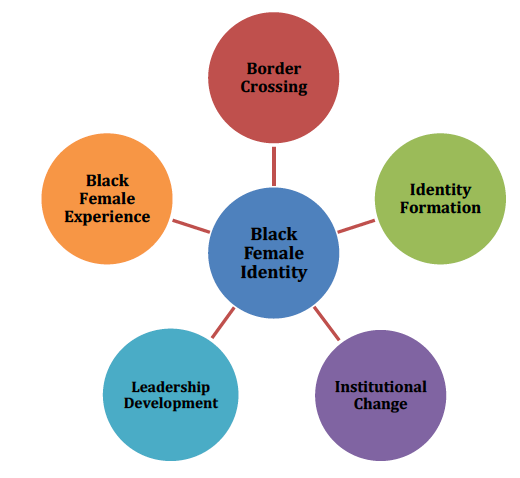
Fig. 1. Exploring the Identities, Journeys, & Success of Black Female Athletes
Project Activities & Method Target Audience and Participant Interviews
As part of this documentary project, the researchers used digital storytelling to conduct individual interviews with two Black female South African athletes and Olympic hopefuls (Glesne, 2006). We also interviewed their parents, athletic director, former coaches, center directors on their campus, and their partners (boyfriends). A semi-structured interview protocol will be used during the interviews to explore their personal and educational journeys, their cultural and racial identities, and their perceptions of success in the current political and Olympic preparation climate. To recruit these athletes, the documentary director drew on his relationships in the athletic department at UWC to work with two sisters who are both Olympic hopefuls. The investigators expect to collect 20-25 hours of documentary interview data from the women and their family members, coaches, partners, and affiliates. The target audience as it relates to viewership is the South African and wider African community, and audiences across the globe who are interested in women’s uplift, the Olympics, black women, and sport more generally.
Observations
The film makers observed and recorded participants in spaces in and around the athletic department and practice fields, as context for the oral histories they construct and share during our interviews or interactions. Observations were primarily be used as context and b-roll to better interpret and inform the information shared in the interviews. Observation field notes were recorded in a journal.
Monitoring & Evaluation Plan
Thematic analysis as outlined by Glesne (2006) was being used to analyze the film footage. The steps of the thematic analysis process are (1) collect data; (2) coding and categorizing the data; (3) searching and synthesizing for patterns; (4) and interpret the data. Specifically, data from the interviews will be video recorded, analyzed, and coded through attentiveness to the participant’s selectivity, slippage, repetition, and “the pattern[s] of their own priorities” (Casey, 1993, p. 19). Participants’ narratives will be assessed based on the topics, ideas, people, recollections, and stories that are privileged during the interviews. The film director and editor were attentive to the dynamics that were omitted by the participants. Film data analysis proceeded inductively to find commonalities among the participants. In pursuit of validity in this documentary, the investigators allowed for and examined “competing explanations and discrepant data,” so that the documentary affirms the knowledge, perspectives and experiences of the Black females who participate rather than being a reflection of the director’s own biases. Small focus group feedback was used to assess each iteration of the documentary’s development.
Relevant Accomplished Work by the Director from 2017 Study Research: Emerging Theme & Preliminary Analysis
Men are Trash. The abuse and mistreatment of women in South Africa has been a major topic of concern. News reports of a woman who was burned to death by a man were reverberating around Cape Town during my time collecting data. The Men are Trash movement speaks to the disgust and frustration of women in South Africa who will no longer remain quiet about the problematic masculinities that infringe upon their health and wellbeing. Many black male study participants discuss the prevalence of rape and abuse of women, and the associated tensions that exist in discussing and dismantling these and other gendered issues.
KEY PERSONNEL (in alphabetical order)/ PROJECT PARTNERS/ ACCOMPLISHED WORK
Project Courtesy Advisor/ Focus Group Member: Javan Cornelius of ShoeShine Media
Javan Cornelius is the founder of Shoeshine Media and an international award winning content creator who has worked with some of the most notable experts in the speaking, entertainment, religious, educational, and corporate industries including Dr. Eric Thomas (ET The Hip Hop Preacher), Bill Cosby, The University of Missouri, The CW Network, Public Broadcasting Service (PBS), and a number of personal brands, television, and digital media outlets. Following his own calling of creativity, Javan has proven himself to be a well-rounded Producer, Director, and Editor. He has traveled to more than 10 countries and 20 states, successfully delivering visual media projects to clients while inspiring them to hone their own creative genius and propel to the forefront of the marketplace by utilizing cutting-edge video content to enhance their marketing.
Jordan Marushak (a Mizzou film student) served as the editor for the film; Seiler Burr was my audio engineer/ and videographer 2 and Meghan Smith was my camera 1 videographer.
Film Director: Dr. Ty-Ron Douglas
Ty-Ron M. O. Douglas, PhD., is an associate professor of Educational Leadership and Policy Analysis at the University of Missouri (Mizzou). A sought-after international speaker, thought leader and consultant, he has offered guest commentary for major national networks, including Fox News. His research explores the intersections between identity, community/geopolitical space, and the socio-cultural foundations of leadership, spirituality, and education. The recipient of a NCAA grant to study black male athletes and author of the award-winning book, Border Crossing Brothas, Dr. Douglas’ scholarship has appeared in outlets such as Teachers College Record and The Urban Review. He has two new books, including Campus Uprisings: How Student Activists and Collegiate Leaders Resist Racism and Create Hope (Teachers College Press), which—drawing on uprisings at Mizzou and Andrews University—provides guidance for executive and campus leaders.
In addition to interviewing 45 men in less than two weeks in 2017, Dr. Douglas also engage in the following professional activities in Cape Town:
- I spoke at a local elementary school (Montevideo Primary School), where I arranged and transported UWC student athletes to join me in speaking and building relationships with the children and staff. Consistent with the ethos and programming of my Border Crossing Brothas work, I was intentional about helping the student-athletes cross borders and consider partnerships that would allow them to use their influence for good with the youth of the school and city. Notably, I was introduced the Montevideo Primary School and Principal Timmet during my 2015 visit to Cape Town, when I served as a leader of a College of Education teach abroad summer program.
- Delivered invited lectures at the University of Cape Town; Heidelberg College, partnership with University of Western Cape Student Athletes; Next Level Living, Inc community event in which I took and introduced University of Western Cape and Heidelberg students to participate and collaborate together; the University of Western Cape. Sports Administration department
- I created voiceover/ commercial demos for two student athletes, including a female Olympic prospect who sought me out after learning of the work I was doing with the male athletes. I continue to mentor UWC athletes. This has included connecting UWC students with top international speakers like Dr. Eric Thomas who sent a personal video message to some of my study participants who have follow his work and mentioned his name during their interviews with me; one athlete shed a tear after receiving a personal video from Eric “ET” Thomas shortly after our interview session.
- My previous project in Cape Town has yielded a scholarly publication: In the fall of 2017, I published an article in collaboration with Mandla Gagayi. This article was included as a special feature of a special issue. The citation and article link is below:
- Douglas, T. M. O., Green, C., Faloughi, R, Rome, S., Shuck, J., Zanders, M., Walton, T., Harris, T. (2017). Rubber-bullets, resistance, and the rise of a young athletic director: A conversation with Mandla Gagayi about #FeesMustFall, #RhodesMustFall, and campus uprisings in South Africa. Journal of Negro Education. 86(3): 356-367. https://www.jstor.org/stable/10.7709/jnegroeducation.86.issue-3
Marketing & Media Plan
Border Crossing Sistahs is a short documentary film that will display using production mapping/ video art installation in South Africa, as well as distribution in the United States. Public displays have become more difficult due to Covid-19. Using the documentary book trailer and our networks across the film and educational landscapes, I plan to use a robust and comprehensive social media campaign to garner interest in this project’s release and final product in 2021.
Additionally, I continue to explore showings at major sport organizations and universities in Cape Town and the United States as a platform for audience engagement and access. We will continue to pursue opportunities with outlets such as ESPN 30 for 30, PBS, Netflix, and the OWN Network for distribution, as well as opportunities for the film to be shown in schools in Cape Town as curriculum for the next generations of students to be inspired.
Future Founding & Sustainability
Future funding for this project and its sustainability is grounded in Dr. Douglas’ research agenda and the larger previous and ongoing projects that he is engaged in around Border Crossing Brothas/ Sistahs in academic and media spaces across the diaspora. This current project will potentially be used to solicit additional funding for a larger documentary series.
References
Adler, P.A., & Adler, P. (1991). Backboards and blackboards: Colleges and role engulfment.
New York: Columbia University Press.
Beamon, K., & Bell, P. (2006). Academics versus athletics: An examination of the effects of background and socialization on African-American male student-athletes. The Social Science Journal, 43, 393-403.
Beasley, S., Miller, I. S. K, & Cokley, K. (2014). Academic and psychosocial development of African American males in PreK-12 settings. In J. L. Moore & C. W. Lewis (Eds.), African American Male Students in PreK-12 Schools: Informing Research, Policy, and Practice. (pp. 1-25). Bingley, UK: Emerald Group Publishing Limited.
Butler, J. (1999). Gender trouble: Feminism and the subversion of identity. New York: Routledge.
Casey, K. (1993). I answer with my life. New York: Routledge.
Cronin, B. (2010). Sports legend revealed: A marathon runner nearly died. Los Angeles Times.
Retrieved 28 June 2020 from https://latimesblogs.latimes.com/sports_blog/2010/08/sports-legend-revealed-a-marathon-runner-nearly-died-because-of-drugs-he-took-to-help-him-win.html
Edwards, H. (2000). Crisis of Black athletes on the eve of the 21st century. Society, 37, 9-13. Gause, C. P. (2008). Integration matters: Navigating identity, culture, and resistance. Peter
Lang.
Giroux, H. A. (2005). Border crossings (2nd ed.). New York: Routledge Taylor & Francis Group.
Glesne, C. (2006). Becoming qualitative researchers: An introduction (3rd ed.). Boston: Pearson.
Harrison, L., Jr., Harrison, C. K., & Moore, L. N. (2002). African American racial identity and sport. Sport, Education, and Society, 7, 121-133.
Hatch, J. A. (2002). Doing qualitative research in education settings. Albany: SUNY Press. O’Toole, S. (2016). Story of South Africa’s first black Olympians keeps us guessing. Mail &
Guardian Online. Retrieved 28 June 2020 from https://mg.co.za/article/2016-07-07-00-story-of-south-africas-first-black-olympians-keeps-us-guessing/
Melendez, M. C. (2008). Black football players on a predominantly white college campus:
Smith, D. (2013, December 8). Francois Pienaar: ‘When the whistle blew South Africa changed forever.’ The Observer. Retrieved from http://www.theguardian.com/world/2013/dec/08/nelson-mandela-francois-pienaar-rugby-world-cup
Reviewed 2025-12-24